
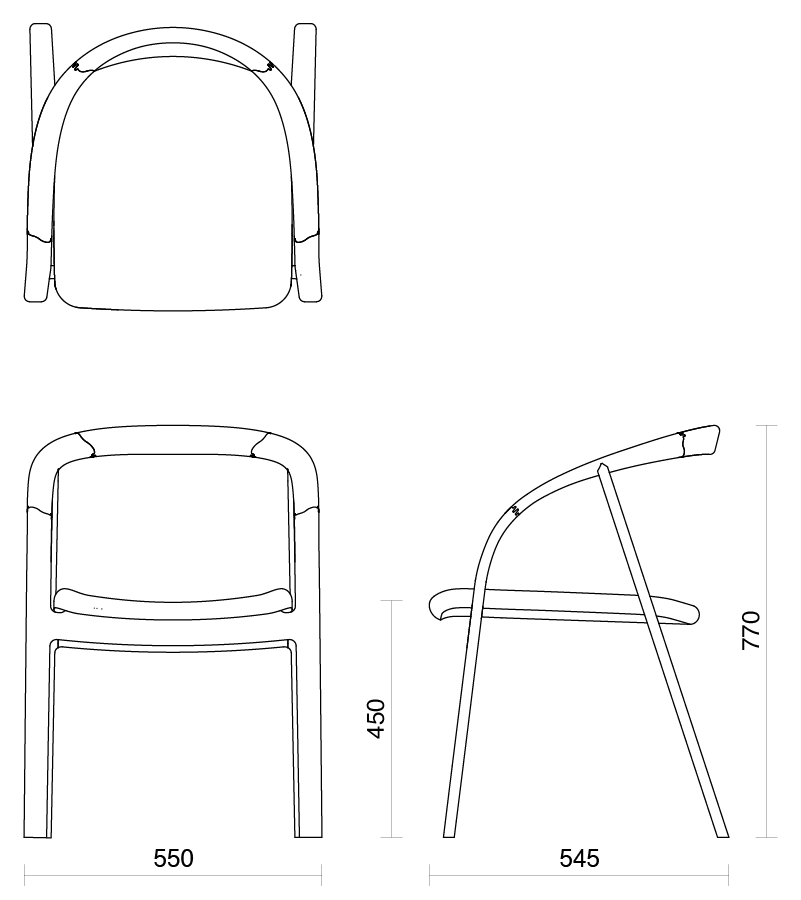
“DAEN” is the Japanese translation for “ellipse”. The name has been chosen because this chair's structure is made from elliptical cross-sections. The rigorous continuation of the ellipse shape fully aligns with the Japanese architectural philosophy, in which beams and columns preferably also take the same shape. The twisted finger joints result from this continuous elliptical structure and reflect the craftsmanship of the designer and manufacturer. The ellipse has a wide and narrow side. The wide side supports the back and elbows, while the narrow sides make the chair look lighter. Although the chair was born from a clear concept, DAEN was difficult to make. Several construction...
Born in Tokyo in 1960. Studied under designers Choei Hara and Shigemitsu Hara. Established Koizumi Studio in 1990. In 2003, he opened Koizumi Tool Store as a place to communicate his designs. He has designed everything from architecture to chopstick rests, and now travels all over Japan to collaborate with local communities. In 2015, he launched a general incorporated association called Waza, which is dedicated to the restoration of handicrafts. He is a professor emeritus at Musashino Art University. He...
- Timber: dust with a soft dry cloth. Wipe marks with a well-wrung damp cloth and dry straight away. Avoid alcohol, thinners and other solvents.
- Fabric: brush lightly and vacuum on low with a soft brush. Blot spills with a dry cloth; do not rub.
- Leather: dust with a soft dry cloth. Keep away from heaters, and avoid shoe cream and solvents.
- Keep out of direct sun and away from heating and cooling vents to prevent fading, cracking and warping.
- Check screws occasionally and after moving. Lift the piece, do not drag it.